



Out of Possession Landlord Liability in New York Lawsuits
Out of Possession Landlord Liability in New York Injury Cases
Property owners across New York often lease an entire building to a tenant and then step away from daily operations. Years later, a visitor falls on a broken stair and sues everyone named on the deed. Here the doctrine of out of possession landlord liability decides who stays in the lawsuit. Courts treat the question as one of control rather than title. Understanding that distinction early shapes the whole case.
The General Rule for an Out-of-Possession Landlord in New York
Under settled New York law, an owner who surrenders possession usually owes no duty to repair the premises. That means the tenant, not the owner, answers for conditions inside the leased space. Landlords lean on this rule when they move for summary judgment. Still, the rule shields only an owner who truly gave up control. Additionally, courts weigh the course of dealing between the two sides. Judges look past the label and examine what the owner actually did after signing the lease. For example, an owner who kept a superintendent on site may never leave the lawsuit.
Three Exceptions That Pull the Owner Back Into a Lawsuit
Because the general rule carries broad exceptions, few of these lawsuits end at the pleading stage. First comes a contractual or statutory duty to repair the dangerous condition. Next comes a reserved right of re-entry paired with a significant structural or design defect. That defect must violate a specific statutory safety provision rather than a general standard of care. Despite the tidy labels, these routes overlap in practice. Finally, an owner who actually created the defect stays in the case no matter who holds possession.
Each exception carries its own proof problems. A repair covenant in the lease can create a duty even without any statute. Meanwhile, the re-entry exception demands all three elements together. Our guide to apartment building accident landlord liability in New York walks through how these duties reach residential owners.
Beyond that, the exceptions cover more than tripping hazards. Broken locks and unsecured entry doors raise the same control questions. Readers can compare our discussion of negligent security premises liability in New York City for that overlap. Often the owner retained the very system that failed.
Why the Lease Is the First Document to Obtain
Every out of possession landlord lawsuit begins with the lease. The document tells you who promised to repair what. Look for a repair covenant, a right of re-entry and an inspection clause. Since many commercial leases assign all interior repairs to the tenant, that language often decides the motion. Especially in mixed-use buildings, the lease may split repair duties by area. Riders and amendments matter as much as the printed form. Without the full lease file, no lawyer can size up the owner’s exposure.
Discovery should also capture repair records, work orders and building violation histories. Photographs of the defect help fix its structural character. Furthermore, building department records often predate the current tenancy. During depositions, ask who held the keys and who called the plumber. Notably, an owner who inspected quarterly has already admitted a right of entry.
Building Code Provisions and the Structural Defect Requirement
Under the re-entry exception, a general negligence theory will not carry the day. Plaintiffs must point to a concrete code section. In New York, the Multiple Dwelling Law and the New York City Administrative Code supply the usual provisions. Multiple Dwelling Law 78 obliges an owner to keep the building in good repair. Across the state, an older building code may govern a structure raised decades ago. Therefore the year of construction becomes a research question of its own.
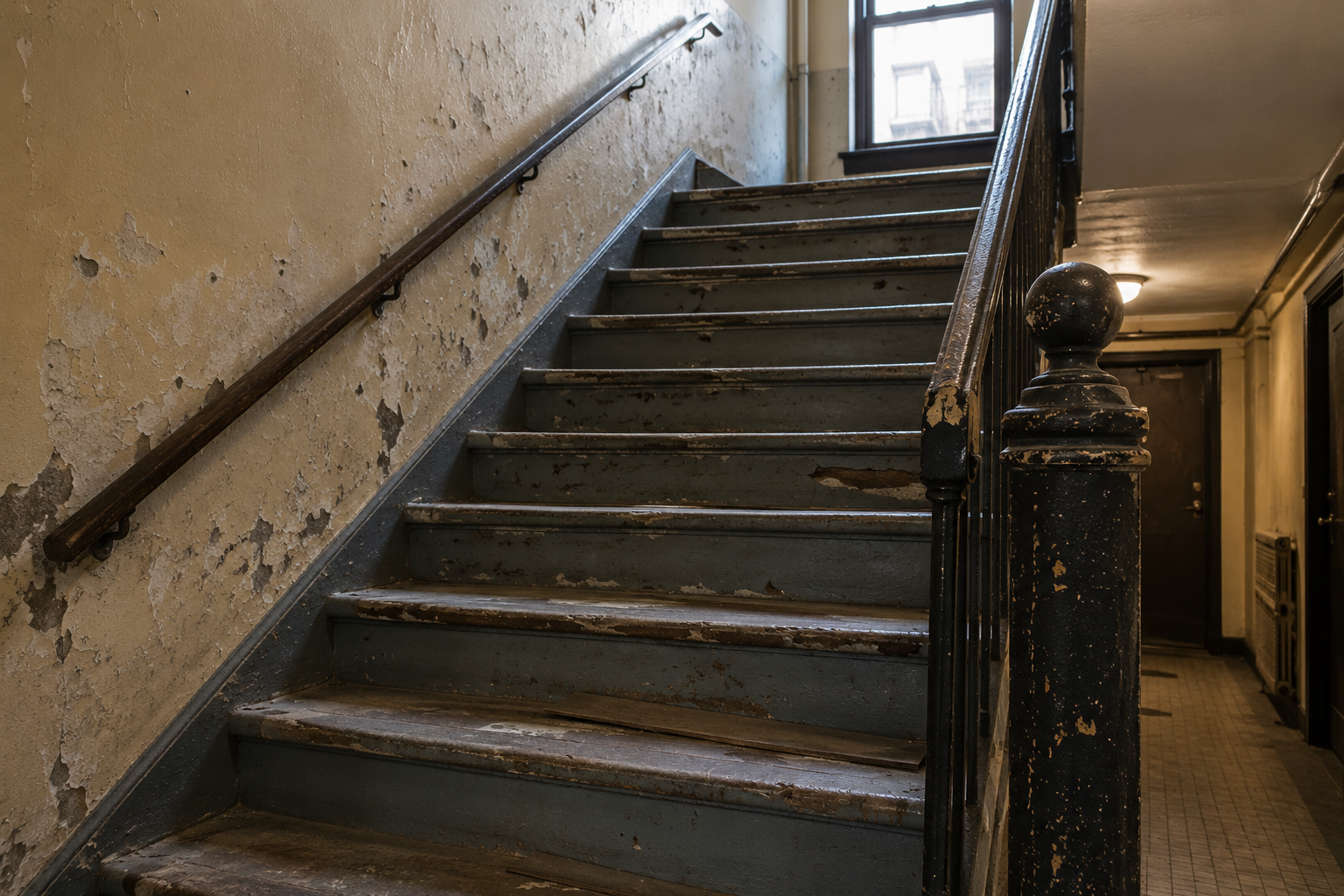
Stairs generate more of these disputes than any other building feature. Riser heights, tread widths and handrail dimensions all appear in the codes. Instead of arguing general untidiness, tie the defect to a numbered provision. Here, our review of stairway accident lawsuits in New York explains those measurements. Even so, a worn tread plus a code violation supports a strong lawsuit. In fact, a loose runner or a spilled drink rarely qualifies as structural.
Out of Possession Landlord Rulings Keep Reaching the Second Department
Four recent decisions of the Appellate Division, Second Department turned on this doctrine within three weeks. Bonilla v 702 Rockaway Avenue, LLC arrived on August 12, 2026. Bracey v 107-47 Sutphin, LLC was handed down on August 19, 2026, alongside Robinson v Temple Israel of Lawrence. Welch v Cuttitta followed on August 26, 2026. Each addressed out of possession landlord liability. Such a cluster shows how constantly litigants press the doctrine.
Two lessons follow for anyone hurt on leased property. Sue the owner and the tenant, then let discovery sort out control. Fortunately, a prompt lawsuit preserves proof against both defendants. Meanwhile, preserve the defect through prompt photographs and a written notice letter.
Bring Your Landlord Injury Lawsuit to The Law Firm of Andrew M. Stengel, P.C.
Owners, managing agents and tenants often point at one another after a serious injury. Our premises liability lawyers in New York City read the lease before answering that question. We pull violation histories, code provisions and inspection testimony to test every exception.
Today an out of possession landlord defense arrives early, so build the record early. Review the firm’s civil practice areas to see the injury lawsuits we handle across New York. Contact us to discuss your case. Email info@stengellaw.com or schedule at https://calendly.com/stengellaw.