



Police Failure to Intervene: Suing the Bystander Officer
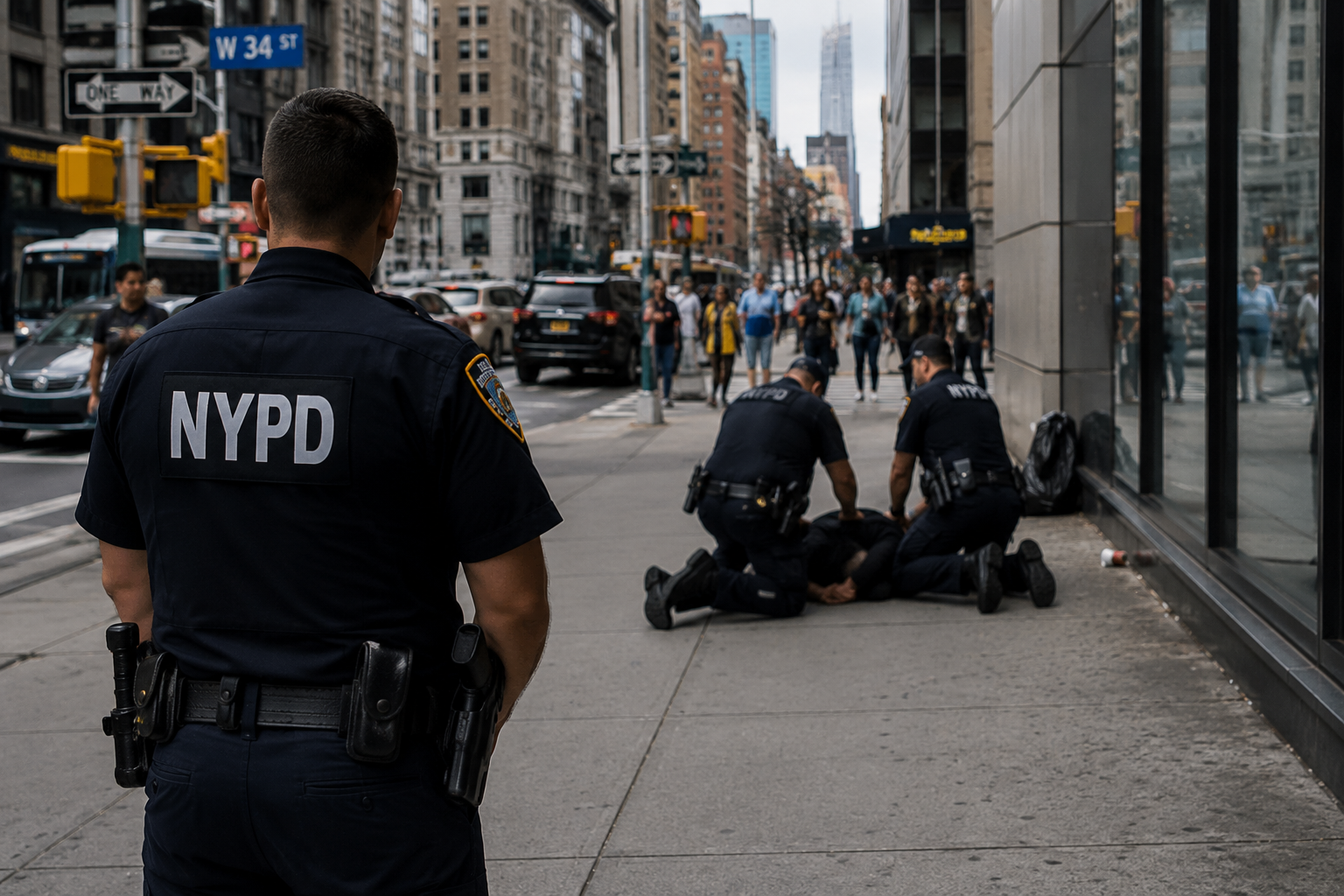
Police Failure to Intervene: Suing the Officer Who Stood By
Police misconduct rarely involves a single officer. Often a second officer stands close enough to stop the harm and does nothing at all. Under Section 1983, that inaction carries liability of its own. A police failure to intervene lawsuit targets the bystander officer directly, not merely the one who threw the punch. Two published Second Circuit decisions this summer pushed the doctrine back into view for New York litigators.
Victims often assume the silent officer escapes responsibility. Federal law says otherwise. Every sworn officer owes an affirmative duty to protect a person from a constitutional violation happening in front of them.
What a Police Failure to Intervene Lawsuit Must Prove
Federal courts throughout New York apply a three-part test. First, the officer had a realistic opportunity to intervene and prevent the harm. Next, a reasonable person in that officer’s position would have known that a constitutional violation was underway. Finally, the officer did not take reasonable steps to stop it. Each element carries real weight at summary judgment.
Realistic opportunity does most of the work. Courts routinely dismiss a lawsuit where the entire encounter lasted only a few seconds. Duration and proximity therefore decide many of these cases before a jury ever hears them. A three-minute restraint on a Brooklyn sidewalk looks very different from a single blow in a doorway.
Bystander liability reaches more than punches and takedowns. Across New York, plaintiffs raise the theory in false arrest cases and in a police sexual misconduct lawsuit against a department. Here, an officer’s rank matters less than the chance to act. Supervisors and rookies answer under the same standard.
Bystander Liability Rises and Falls With the Underlying Violation
This cause of action is derivative. Because the theory depends on someone else’s constitutional violation, it cannot stand on its own. If a jury finds no excessive force, the bystander officer walks out of the case with the rest.
In Chapdelaine v. Desjardin, decided July 2, 2026, the Second Circuit addressed exactly that point. The court took up whether a failure-to-intervene theory survives without a viable underlying excessive-force violation. Farrington v. Poole followed on August 6, 2026. There, the disposition of the excessive force and bystander theories turned in part on which constitutional standard applied. That means the framing of the underlying violation shapes the whole lawsuit from the first pleading forward.
Plaintiffs in New York usually plead both theories together for that reason. Instead of choosing early, good counsel develops the direct and the bystander theories side by side. Discovery then reveals which officer struck the blow and which one simply watched.
Qualified Immunity and the Officer Who Watched
Qualified immunity shields an officer unless clearly established law placed the duty beyond debate. Since the duty to intervene has deep roots in Second Circuit law, the defense rarely defeats a well-built record. Still, officers argue that events unfolded too fast for any realistic chance to act.
Fortunately, that argument often collapses once the footage runs in real time. Similar immunity fights arise in a fabricated evidence lawsuit under Section 1983, where officers dispute what they knew and when. Judges resolve immunity as a legal question, so briefing must tie every fact to a clear rule. Sloppy fact statements lose cases that strong evidence should win.
Evidence That Wins a Police Failure to Intervene Lawsuit
Body-worn camera footage decides most of these cases. During a chaotic arrest, video shows where each officer stood and for how long. Radio traffic, arrest paperwork and nearby surveillance video fill the remaining gaps. Without that record, a bystander case becomes a pure credibility contest.
Today, most New York departments run camera programs, though officers do not always activate them. Even so, missing video can support an adverse inference at trial. Our discussion of a Brady violation lawsuit explains how withheld material creates separate exposure. Preservation letters go out early in every one of these matters.
However, footage alone rarely finishes the job. Witness statements, medical records and the officers’ own memo book entries add context. Therefore we build a minute-by-minute timeline of the encounter well before any deposition begins.
New York Courts and Section 1983 Pleading Standards
State courts hear Section 1983 cases alongside the federal district courts. In Pressley v. City of New York, the Appellate Division, Second Department addressed a Section 1983 failure-to-intervene cause of action. That decision, dated December 24, 2024, applied New York’s liberal notice-pleading standard to federal civil rights allegations.
Notably, a pleading survives when it gives officers fair notice of the transaction at issue. Venue choice still affects discovery timing, motion practice and the jury pool. Suits against a municipality raise notice-of-claim questions under the General Municipal Law. Those questions reach only state-law causes of action pleaded alongside the federal ones. Beyond that, the ninety-day municipal deadline never governs the Section 1983 counts themselves.
Talk to a New York Civil Rights Lawyer About the Officer Who Stood By
The Law Firm of Andrew M. Stengel, P.C. represents people hurt by police misconduct throughout New York. Our team as a New York civil rights lawyer handles excessive force, false arrest lawsuits and malicious prosecution. Early investigation protects footage before a retention window quietly expires.
Meanwhile, our broader civil litigation practice areas cover related injury and misconduct matters across the state. Contact us to discuss your case. Email info@stengellaw.com or schedule at https://calendly.com/stengellaw.