



Sole Proximate Cause Defense: Beating Labor Law 240 in NY
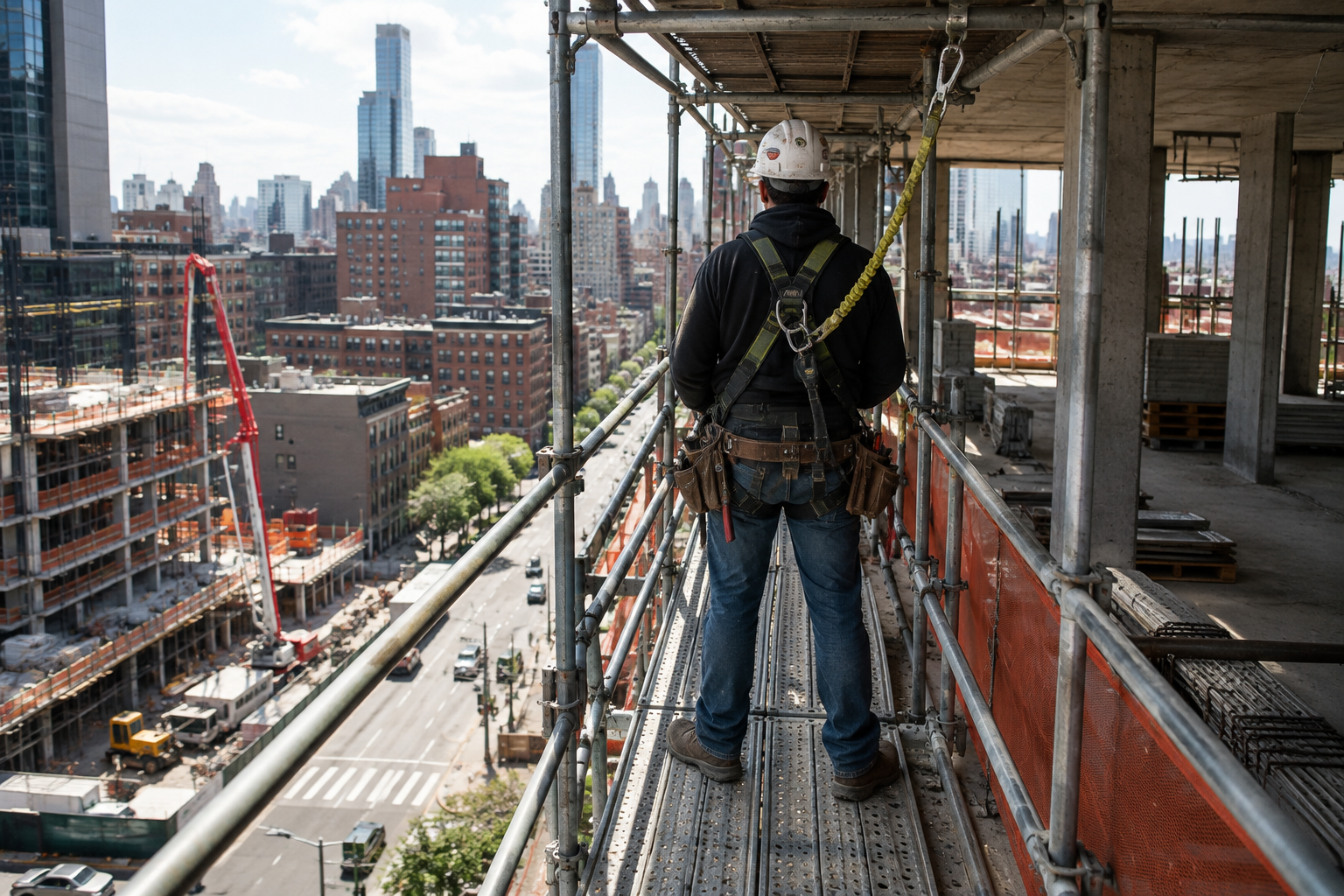
Sole Proximate Cause Defense: Beating It Under Labor Law 240
Labor Law 240(1) gives injured construction workers throughout New York the strongest liability tool in the state. Defense counsel know it. Because of this, they reach for one argument again and again. That argument is the sole proximate cause defense. Understanding how it works, and how narrow it really is, decides many elevation-related cases. The Law Firm of Andrew M. Stengel, P.C. litigates these disputes across New York.
Understanding the Nondelegable Duty Under Labor Law 240(1)
Under the statute, owners, general contractors and their agents carry a nondelegable duty. They must furnish scaffolding, hoists, ladders, secure platforms and similar devices for elevation-related work. Each device must give proper protection to the worker who uses it. One exception covers owners of one and two family dwellings who do not direct or control the work. Everyone else answers for a failure of protection, whatever the subcontracting chain looks like.
Because the duty cannot pass down that chain, ordinary fault arguments fall flat. A worker’s own carelessness does not reduce recovery here. Our firm walks through the full framework in a guide to bringing a Scaffold Law lawsuit in New York. Still, one narrow escape route survives for the defense.
What the Sole Proximate Cause Defense Actually Requires
Courts ask a single question. Did the worker’s own conduct produce this accident, with nothing else contributing? Judges apply a four-part test before they accept that answer. Every part must hold up on the record.
- Adequate safety devices sat available at the work site.
- The worker knew about those devices and knew the job called for their use.
- He chose, for no good reason, not to use them.
- Proper use would have prevented the fall.
Furthermore, the defendant carries the burden on every element. Any missing element sinks the argument, and the statute controls. For example, a harness locked inside a trailer helps nobody on a roof. Instead, courts look hard at what the worker actually had at hand. Here our discussion of a Section 240 ladder fall lawsuit walks through that proof.
Notably, the phrase appears nowhere in the statutory text. Judges built the sole proximate cause defense decision by decision. As a result, its contours shift with the facts of each appeal. Courts read it narrowly, since a broad reading would swallow the protection the Legislature wrote into the statute.
How the Recalcitrant Worker Label Fits the Analysis
Defense lawyers often attach a label to this argument. They call the plaintiff a recalcitrant worker. Historically, that label described someone who refused a direct instruction to use an available device. Today courts treat the recalcitrant worker idea as one piece of the sole proximate cause analysis. In other words, a refusal matters only when every element of the test holds.
A standing order to use safety equipment, without more, rarely proves enough. Often the proof falls apart at deposition. Meanwhile, injured workers can pursue parallel theories, including a Labor Law 241(6) lawsuit built on Industrial Code violations. Comparative fault does reduce recovery on that separate theory, so pleading both routes matters.
Some site injuries flow from a dangerous condition rather than an elevation risk. Those cases fit better with a premises liability lawyer in New York reviewing notice and maintenance records. Sorting the correct theory early shapes discovery and settlement value.
Three August 2026 Rulings on the Sole Proximate Cause Defense
During nine days this August, New York appellate courts touched these issues three times. First, the Second Department decided Gabriel v. Top 8 Construction Corp. on August 12, 2026. Testimony that the ladder suddenly shook made out a prima facie case. Conflicting accounts of how the accident happened defeated summary judgment.
Next came Tobon v. Ryder Construction, Inc., a Second Department ruling dated August 19, 2026. There a factual dispute existed over whether bypassing a safety railing was the sole proximate cause of the fall. Since that dispute remained live, the question stayed open. Finally, the First Department decided Tobon v. Turner Construction Co. on August 20, 2026. Its opinion noted that comparative negligence is not a defense to a Labor Law 240 cause of action.
Together, these three decisions show a pattern. Where the accounts conflict, judges send the case forward rather than dismiss it. Sworn testimony from the injured worker carries real weight at the summary judgment stage. Even so, a plaintiff should expect the argument in almost every answer.
Common Questions About the Sole Proximate Cause Defense
Does my own mistake end my Labor Law 240 lawsuit?
Usually not. Fortunately, comparative negligence gives defendants no defense under this statute. Only conduct that stands as the whole cause of a fall defeats recovery.
What if my employer told everyone to wear a harness?
General safety talk rarely satisfies the test. Instead, the record must show an available device, a clear direction to use it and no good reason for skipping it.
How soon should I call a lawyer after a fall?
Speak with counsel right away. Often site conditions change within days, and photographs of the ladder or scaffold decide the motion. Beyond that, early counsel preserves witness names before the crews move on.
Build the Record Early to Defeat a Sole Proximate Cause Defense
Our firm builds these lawsuits from the site conditions outward. We gather the safety plan, the daily logs and witness accounts before defendants shape the story. Preserving that proof early answers the argument long before motion practice. As a seasoned construction accident lawyer in New York, Andrew M. Stengel handles elevation-risk lawsuits statewide. Contact us to discuss your case. Email info@stengellaw.com or schedule at https://calendly.com/stengellaw.