



Brain Bleed Lawsuit New York: Subdural and Epidural Bleeds
Brain Bleed Lawsuit New York: Subdural and Epidural Hematoma
Earlier this month, the Appellate Division, Second Department decided DiCarlo v. Metropolitan Transportation Authority. That plaintiff suffered an epidural hematoma, a type of traumatic brain injury. Surgeons operated, and a hospital stay followed. Here, a bleeding brain injury reached an appellate court through everyday transit and premises litigation. Because these bleeds surface in ordinary lawsuits, injured New Yorkers should know how they behave.
A brain bleed lawsuit New York accident victims file usually begins with a fall or a struck-by-object event. Understanding what happens inside the skull explains why so many head injuries slip past the first exam. Today, this post walks through the anatomy, the missed warning signs, the surgery and the proof that carries a case.
Subdural, Epidural and Subarachnoid Bleeds After a New York Accident
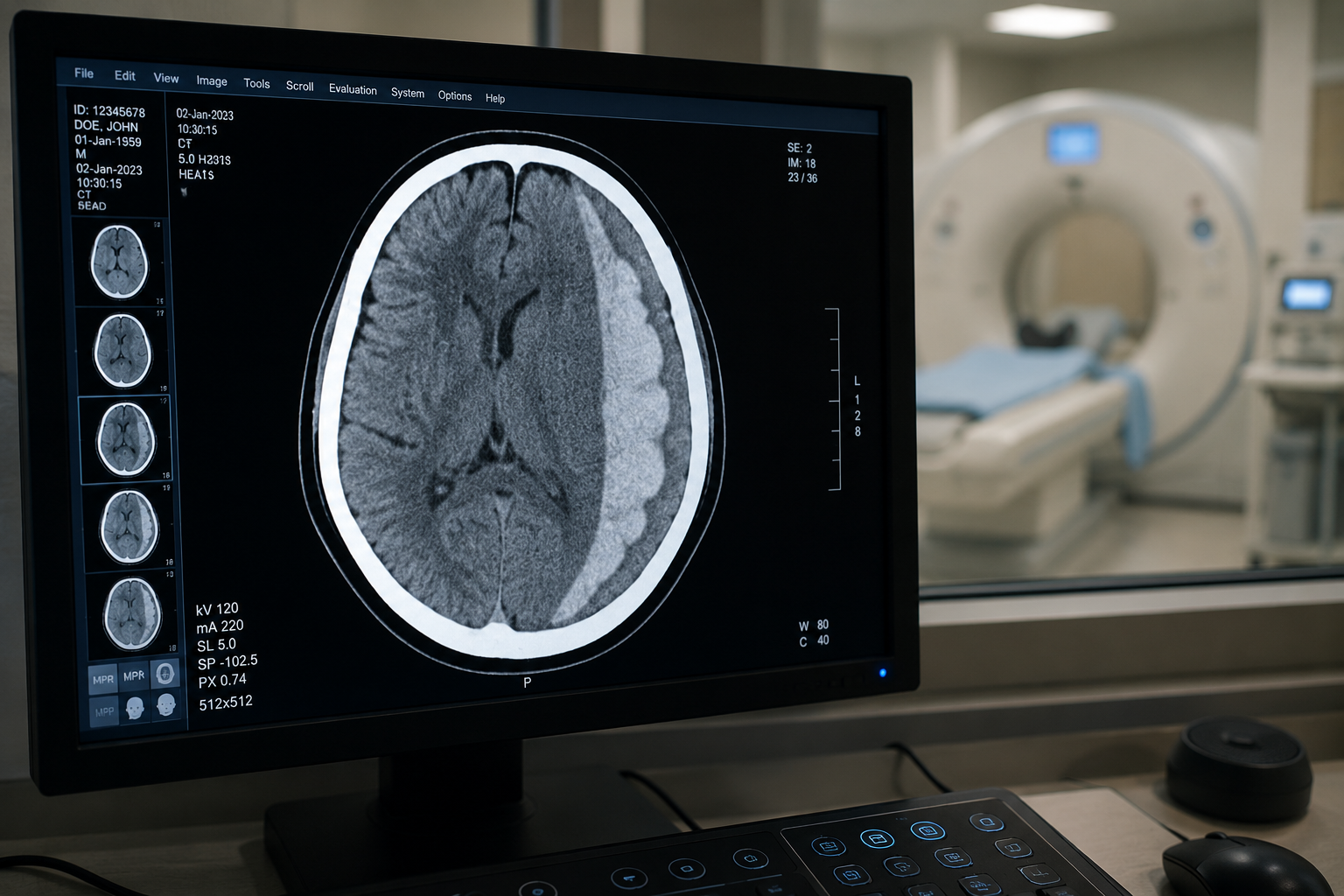
Doctors group traumatic bleeds by the space that fills with blood. A subdural hematoma collects between the brain and its tough outer covering. Trauma tears a bridging vein, and the pool grows slowly. Epidural bleeding sits outside that covering, usually after a skull fracture damages an artery. Under arterial pressure, the pocket expands fast. Subarachnoid haemorrhage spreads across the brain surface where spinal fluid circulates.
Each pattern arises from ordinary accidents throughout New York. Falls on icy sidewalks, tumbles down dim stairways and objects dropped from height all produce these injuries. Scaffold collapses at construction sites add another large share. Even a low-speed strike can tear a vessel in an older adult or someone taking blood thinners. Our overview of what causes a traumatic brain injury and the rights that follow traces those mechanisms.
The Lucid Interval and Why Early Symptoms Get Missed
Epidural bleeding produces a pattern that fools everyone in the room. The injured person blacks out briefly, wakes up, talks normally and looks fine. Clinicians call that stretch the lucid interval. Meanwhile blood keeps pooling, pressure keeps climbing and the person crashes hours later.
Subdural bleeding moves even more slowly. Symptoms may surface days or weeks later as headache, growing confusion, poor balance or a personality shift. Because families expect an obvious wound, they wait. Insurers later argue that the delay proves nothing serious happened. Our discussion of a delayed TBI lawsuit in New York answers that defense.
Notably, a normal appearance at the scene proves very little. Ambulance crews record what they see in minutes, not what unfolds overnight. In fact, doctors often diagnose a chronic subdural bleed only at a second visit. Upon any real blow to the head, prompt evaluation matters. Especially for older adults and people on anticoagulants, that visit cannot wait.
Imaging and Surgery Turn a Suspicion Into Solid Proof
Imaging separates a bad headache from a haemorrhage. Non-contrast head CT shows fresh blood within minutes. For example, an emergency team can spot an epidural pocket well before the patient declines. Emergency departments across New York rely on that scan first. Repeat scans matter just as much, since a small bleed can expand in the waiting area. Next, MRI picks up smaller subdural collections and diffuse damage that CT misses.
Surgeons treat significant bleeds mechanically. During a craniotomy, the team removes a bone flap and evacuates the clot. Burr holes drain many chronic subdural collections instead. Intensive care follows, often with pressure monitoring and sedation. Those records anchor a brain bleed lawsuit New York courts will scrutinise. Dates, scan images and operative findings beat testimony alone.
Still, smaller bleeds resolve without an operation and leave real deficits behind. Clients in that position should read our guide to a mild TBI lawsuit in New York. Imaging can look reassuring while daily function does not. Fortunately, a documented recovery still supports a strong lawsuit when the deficits persist.
Building a Brain Bleed Lawsuit New York Courts Take Seriously
Liability depends on where the accident happened. Under premises law, an owner answers for a dangerous condition it created or ignored after notice. That makes notice the central battleground. Attorneys at this firm’s premises liability practice in New York City gather sweep logs, prior complaints and video quickly. Construction falls run on different fuel. Labor Law 240(1) requires owners and contractors to furnish scaffolding and hoists placed to give proper protection.
Timing rules bite hardest against public defendants. Since transit authorities fall under General Municipal Law 50-e, an injured rider generally serves a notice of claim within ninety days. Miss that window and the lawsuit can end before anyone reads the CT scan. Therefore, a New York traumatic brain injury lawyer should open the file while the hospital chart stays active.
Damages track the deficits that outlast the surgery. Survivors report memory failures, slowed processing, word-finding trouble, headaches, seizure disorders and career-ending fatigue. Neuropsychological testing and treating physician testimony translate those losses into figures. Relatives supply day-in-the-life proof that no chart can show. However, insurers rarely concede those long-term losses without hard expert proof. Beyond that, a household loses income when the survivor cannot return to work. Finally, life care planning captures future therapy, ongoing medication and daily supervision costs.
Talk to Our Firm About the Brain Bleed Lawsuit New York Victims Deserve
The Law Firm of Andrew M. Stengel, P.C. represents people with subdural, acute epidural and subarachnoid injuries across New York State. Andrew Stengel handles each file personally, from the notice deadlines through the valuation of long-term deficits. Contact us to discuss your case. Email info@stengellaw.com or schedule at https://calendly.com/stengellaw.